The Real Estate Brand Guide
The complete guide to branding a real estate practice in BC: how clients actually choose an agent, the strategy no template can do for you, a mark that moves with your career, and the BCFSA rules to design around.

A real estate brand has a harder job than most. It has to stand out in one of the most crowded categories in any market, earn trust for one of the largest decisions a client will ever make, and it never appears on its own. In BC, the brokerage name sits beside it on every sign, post and profile. This Field Note is the long version of how to build one that works: how clients actually choose an agent, the strategy no template can do for you, a mark and system built to move with your career, and the BCFSA rules to design around.
It is long on purpose. Read the part you need. The one-page PDF has both checklists and a positioning worksheet for the meeting where these decisions get made.
The rules section is a planning checklist, not legal advice. Confirm the details with your managing broker and BCFSA before anything goes to print.
A note on where this comes from. I have worked on this from both sides of the desk. Inside a brokerage, as Director of Marketing for a Royal LePage group, where I built the brokerage website and its agent profile system. And as the designer independent agents and teams call when their brand stops matching their business, from Vancouver's West Side to the Fraser Valley. Some of that work is in the real estate branding article. More on the background here.
Part 01: The Market
Field Note No. 12
Get it as a one-page PDF.
How a client actually chooses an agent
A seller rarely picks an agent from one encounter. They notice a sign on their street, then a name a neighbour mentions, then a search, then a profile, then a listing presentation at the kitchen table. Each touch either adds to the picture or chips at it. By the time you're invited in, most of the decision has already been made by your brand.
There are three moments that matter, and each asks a different question. On the street, from a moving car, only colour, shape and a name survive, and the question is: have I seen this before? On a phone, the profile, reviews and photos answer: is this person good, and are they like me? At the kitchen table, the presentation, the feature sheet and you answer: can I trust them with this? A brand that only works at the table has already lost, because most sellers shortlist before they meet anyone.
There are also two clients, and they want different things. The referral is checking. Someone told them your name, and they want to confirm you look as good as the recommendation. The browser is comparing. They have three agents open in three tabs and want a reason to pick one. The referral rewards consistency. The browser rewards difference. A good brand serves both.
The competitive audit
Before anyone opens a design file, drive your patch and photograph every sign. Then pull up every agent and team working that area and screenshot their profiles. Then do three things with what you've collected.
- Catalogue the symbols. Rooflines, keys, doors, house outlines, script signatures, initials in a circle, the little crest. In most BC markets those cover nearly every sign on the street. Anything on that list can't be what identifies you.
- Map the colours. Put every competitor's main colour in one grid. Expect a cluster of navy, black and gold, plenty of brokerage red and blue, and a few gaps. The gaps are where ownership is available.
- Map the positions. Place each agent on two axes that matter locally, for example luxury to everyday, and corporate to personal. Most will bunch together. Whether the empty corner is an opportunity or empty for a reason is a judgment call, and it belongs in the strategy conversation.
The output is one sentence: here's what everyone else owns, and here's what's still available. In one Fraser Valley market, every competitor used safe blues, script type and a house icon. The answer for Mike Cook was a flag, in a green and yellow nobody else would touch. The full story is in the real estate branding article.

Part 02: The Strategy
Why a template can't do this
Anyone can generate a real estate logo now. It takes seconds, and that's exactly the problem. A generator or a template gives you the average of everything it has already seen, and in real estate the average is the roofline, the key and the safe navy. It can produce a lot of options. It can't tell you which one is true.
It also can't sit across the table from you. The useful part of brand strategy happens in conversation: hearing how you talk about your clients, noticing the thing your best referrals keep mentioning, pushing back when an idea is borrowed from the agent down the road. Someone who has done this before hears what you don't say. That's where real difference comes from, and it's the one thing a tool can't hand you.
There's a practical reason too. Buyers and sellers increasingly ask search and AI tools to recommend an agent. Those tools repeat what's clear and consistent about you, and skip what's generic. A sharp position is now how you get described, not just how you look. Your brand is being described by machines now.
What the strategy conversation finds
A good strategy session for an agent is closer to an interview than a design meeting. These are the questions that tend to unlock it.
- What do past clients say when they refer you? Their words, not yours.
- Which listing would you turn down, and why?
- Where do you want to be working in five years: which area, which price band, which kind of client?
- What do you do in a transaction that other agents skip?
- What would you never say in an ad?
- Whose brand, in or out of real estate, do you admire, and what does it make you feel?
The answers rarely produce a tagline on the spot. They produce the raw material: a pattern in how clients describe you, a strength you take for granted, a line you won't cross. What a full brand strategy includes covers the rest of it.
Positioning in one sentence
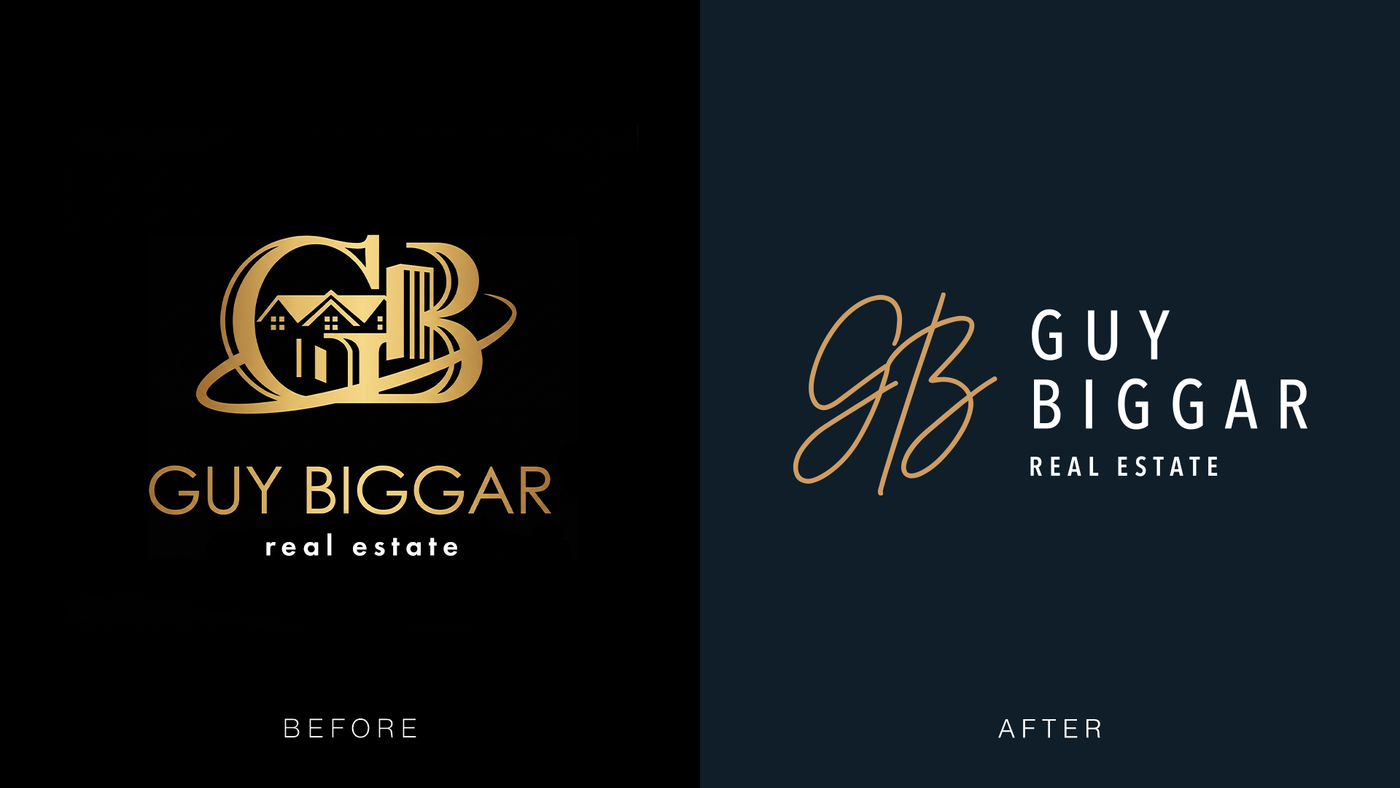
All of that gets pressed into one sentence before any design starts: who it's for, what makes you different, and why it should be believed. Guy Biggar was known on Vancouver's West Side and wanted to grow into Surrey and Langley, but his old crest read as too exclusive for the markets he wanted next. The position became Realty Refined: professional and careful at any price point. The mark, the serif wordmark and the navy and gold all followed from that sentence.
If the sentence could belong to any agent in your market, it isn't finished. It's also worth settling before you spend another dollar on ads or portals: should you fix your brand before you spend more on marketing?
Where generative tools belong
This isn't an argument against tools. They're useful for the busywork around a brand: resizing a feature sheet for five formats, exploring layout variations, drafting a first pass at listing copy, testing how a palette looks on a sign mock-up. They save time and money, and a good studio uses them.
What they shouldn't decide is the position, the mark, or the judgment about what to leave out. Those need a person who knows your market, has watched what works on a real street, and will tell you when an idea is weak. Brand is built human to human. The handmade premium makes the wider case.
Part 03: The Mark and the System
A mark that can move
Agents' careers change shape. They switch brokerages, form teams, leave teams, take on partners and incorporate. A brand built on brokerage colours, or a team name that can't stand alone, starts over every time. A brand built around your own name, with a mark that works without the brokerage, keeps its recognition through every change.
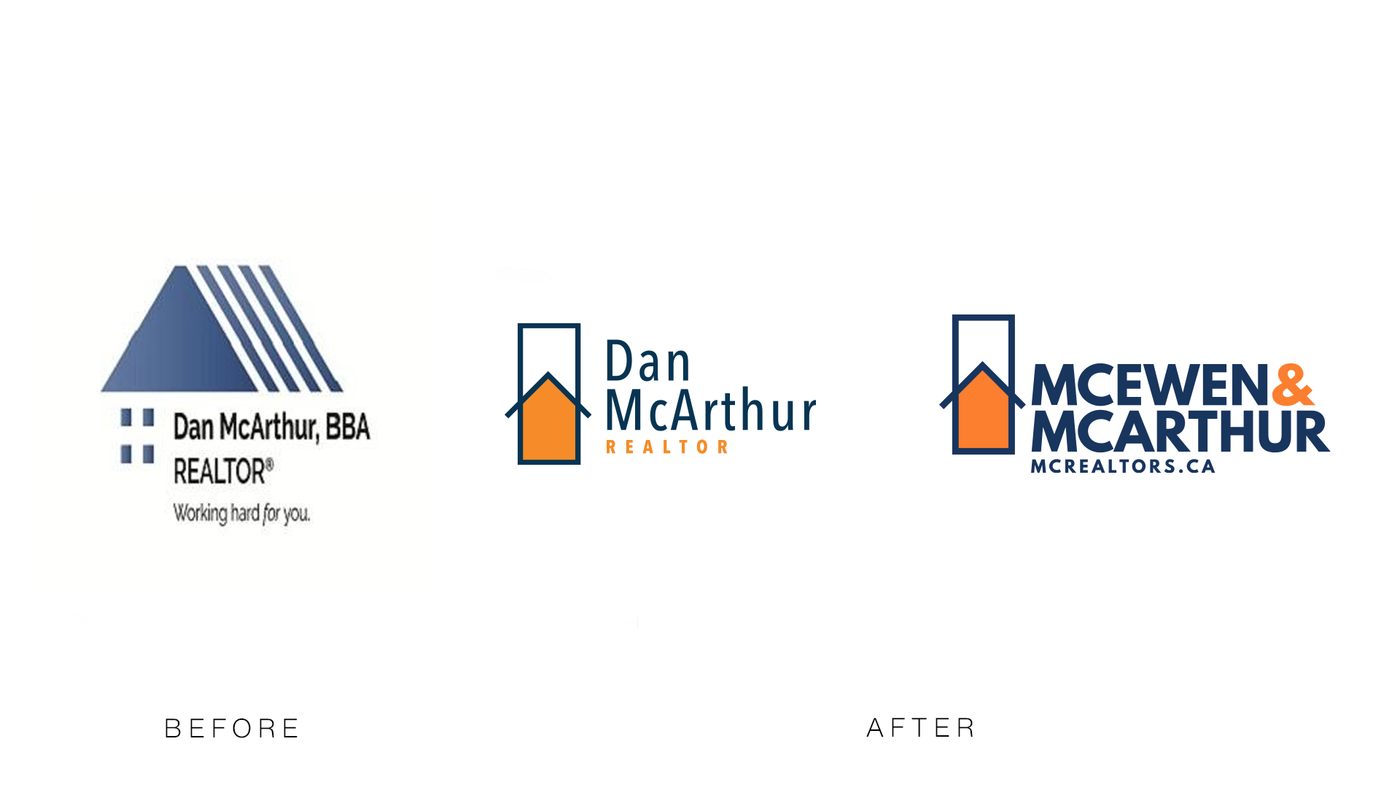
Dan McArthur's brand shows the whole arc. A new mark replaced a stock mountain and a corporate gradient. It carried through a partnership as McEwen & McArthur without modification, and back again when he returned to working solo. The mark was the constant. For the wider decision about when a brand needs to change and when it just needs to move, read Rebrand or Refresh?.
Type and colour
Script signatures are the most overused device in real estate, and the hardest to read from a car. A confident wordmark built from a well-chosen typeface does more work at forty kilometres an hour. How to choose typefaces for your brand goes deeper.
Colour is where ownership is won or lost. Start from the gaps your audit found, check every colour on a sign in daylight and at dusk, and keep brokerage colours out of your own palette so the brand doesn't depend on where you hang your licence. Skip whatever is fashionable this year, because the next three agents will chase it too. Should your brand follow design trends?
The system clients actually meet
Clients meet the system far more often than the logo. Design these together, not one at a time as each one is needed.
- The sign and rider, read from a moving car.
- The feature sheet and listing presentation, read at a kitchen table.
- The social profile and templates, read on a phone at night.
- The email signature, business card and vehicle, seen far more often than you'd think.
Guidelines keep the system consistent once your assistant, your printer and your brokerage start making things with it: crafting cohesive logos and brand guidelines. New to the business? How to make a new brand look established shows how to look credible without borrowing someone else's history.
Naming a team
A team name is a brand architecture decision. Does it sit above your own name, beside it, or replace it? Most agents get more from a team brand that grows out of their own mark, as Team Cook did, than from a new name that resets their recognition. What makes a good brand name has the test for any new name, and BC has its own approval rules, covered in Part 05.
Part 04: The Decisions
The six brand decisions to settle, in order, before the first concept. They're also the front of the PDF.
- Pick your patch. Choose one area, one kind of client or one price band to lead with. You can still sell outside it; the brand just has a clear centre.
- Map the layers. Write down how your brand sits with the brokerage and any team. Decide which leads on a sign, a social profile and a listing presentation before you design any of them.
- Build a mark that can move. Keep brokerage colours and brokerage-style marks out of your own identity. If you change brokerage, form a team or leave one, the mark should come with you unchanged.
- Skip the category shortlist. Rooflines, keys, house icons, script signatures and initials in a circle are what everyone else reaches for. Distinctive beats literal.
- Make it travel across price points. The same brand should feel right on an entry-level townhome and a high-end listing. Restraint travels better than ornament.
- Design the system, not the logo. Plan the sign, rider, feature sheet, listing presentation, social templates, email signature and vehicle together.
Part 05: The Rules
The BC advertising rules a real estate brand has to be designed around, checked against BCFSA's advertising checklist and teams guidance, and CREA's trademark guidance, in October 2026. Design around them from the first sketch and they cost nothing. Discover them at the sign shop and they cost a reprint.
- Lock up the brokerage name. Every ad, sign, page, post and profile must show the brokerage's full registered name, prominently and legibly (Real Estate Services Rules, s. 40(2)). Small type at the foot doesn't meet it, and short forms or translations aren't allowed. Design a lockup with it from day one.
- Brand the name you're licensed under. You must advertise under your licensee name: your legal name, a recognizable short form of it, or a name BCFSA has approved (s. 38(2)). Build the wordmark around the name you'll actually be allowed to use.
- Plan for a personal real estate corporation. If you hold one, advertising must use the corporation's licensee name, with “personal real estate corporation” spelled out. The “PREC*” short form is only for board database listings, not your own ads. Leave room for it in the type system.
- Name a team the way BCFSA will approve it. A team name must read as a group working together, must not suggest a company or brokerage, and can only use “Realty” or “Real Estate” when followed by “Team” or “Group”. You can't advertise as a team until the name is approved, and every member's ads must carry it.
- Carry it online. The brokerage name has to appear on every web page and profile. On YouTube it goes in the channel About or the video description; on Pinterest it sits on the image itself. A QR code's landing page needs it too.
- Keep claims and trademarks clean. “Top selling” or award claims need their source and date (s. 41). Photo edits can remove bins or parked cars, not power lines or physical features. CREA asks that REALTOR® is written in capitals with ®, after your title, and never modified; using it in a team name needs CREA's permission.
Your brokerage or franchise may add its own brand standards on top of these rules. Get them before the first concept.
Putting it into the design process
- Write the positioning in one sentence before the first sketch: who it's for, and what you do differently.
- Design the brokerage lockup first, then the brand moment around it. Sign, profile and feature sheet are the three tests.
- Judge the first concepts against the positioning sentence, not personal taste. How to give useful feedback on brand design.
- Proof every piece with your managing broker before it prints, especially signage, which is the costliest to redo.
- Keep the mark free of brokerage and team elements, so it survives the next move.
Related reading
Field Note No. 12
Get it as a one-page PDF.
The checklist and a positioning worksheet on one page, ready for your next brand meeting.
Building a real estate brand, or outgrowing the one you have? Serif + Gold builds brands for agents and teams that stand out on the street and stay compliant on every sign. Get in touch to talk it through.
Talk it through